Designed for metal
Use specialist constructions intended to operate on conductive surfaces rather than adapting a standard paper label.
RFID for demanding surfaces
Metal changes the behaviour of a conventional RFID inlay. On-metal tags use a purpose-designed construction to manage that environment. We match tag format, attachment, print method and read performance to the real asset and its lifecycle.
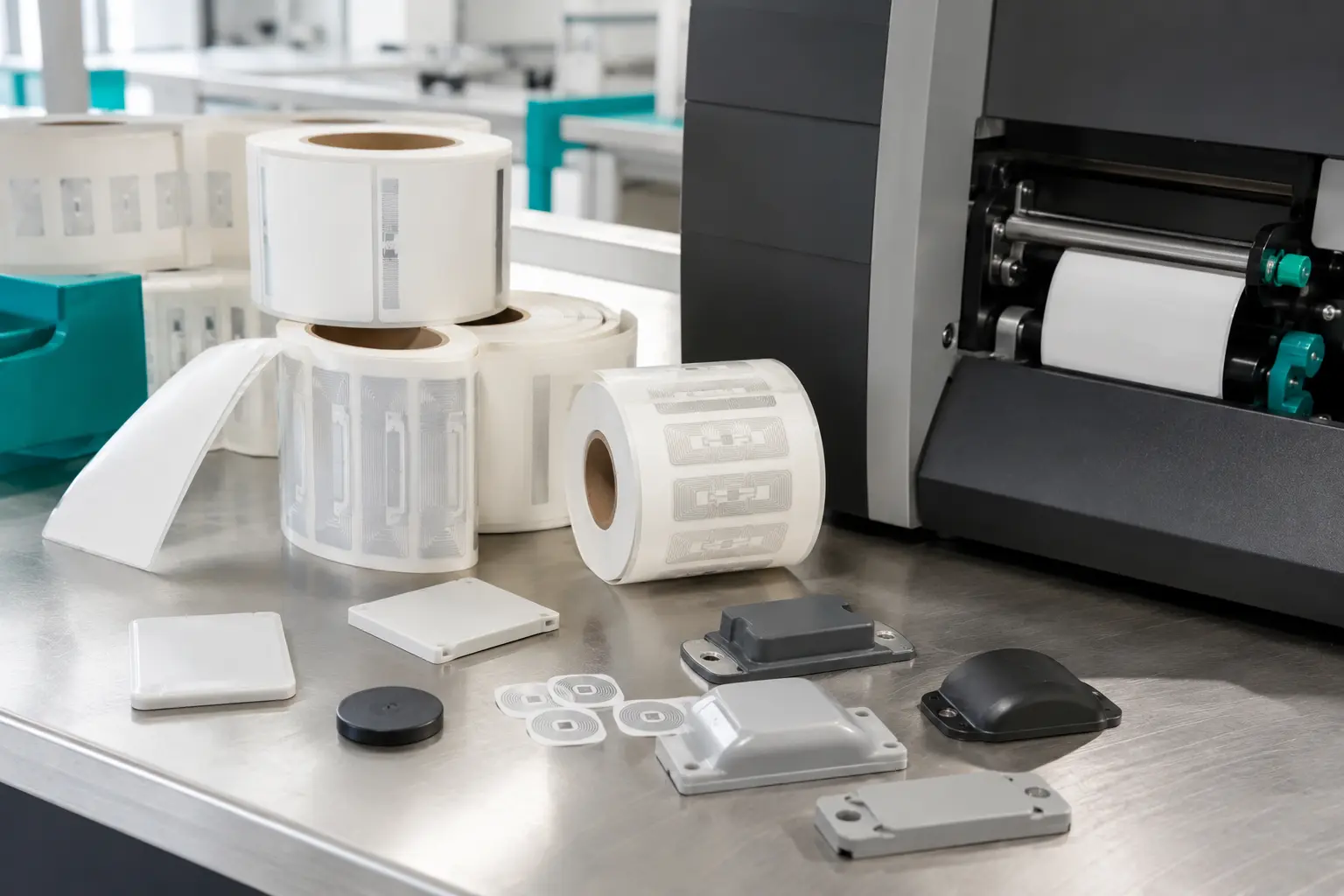
A complete working process
We consider the label, data, encoder, product and downstream read point together—because each one affects the result.
Use specialist constructions intended to operate on conductive surfaces rather than adapting a standard paper label.
Specify facestock, print, adhesive or mechanical fixing around abrasion, chemicals, temperature and outdoor exposure.
Where the construction permits, add text, codes and serial numbers while encoding the electronic identity.
Validate orientation, mounting surface and read zone using representative equipment before rollout.
Specification checklist
A short discovery call and representative samples can remove much of the risk from equipment and media selection.
Start the specificationWhere it fits
Frequently asked questions
Have a more specific technical question? Send a sample or speak directly with our team.
sales@oxfordtraceability.co.ukA nearby conductive surface can detune the antenna and alter the RF field. A purpose-designed on-metal tag introduces a construction that helps the antenna operate in that environment.
Some thin, flexible on-metal labels are supplied in roll formats suitable for compatible printer-encoders. Rigid or unusually thick tags may need separate printing, laser marking or pre-encoding.
The choice depends on the asset and environment. High-performance adhesives may suit smooth surfaces, while mechanical fixing can be preferable for rough, high-temperature or long-life applications.
Make the next decision easier