RFID label supply options
Pre-printed and pre-encoded RFID labels built around your data
Choose whether fixed artwork, variable print, serialisation and RFID encoding happen before delivery or on demand at your site—and define the controls before production starts.
Reviewed by the Oxford Traceability application team · Updated 25 August 2026
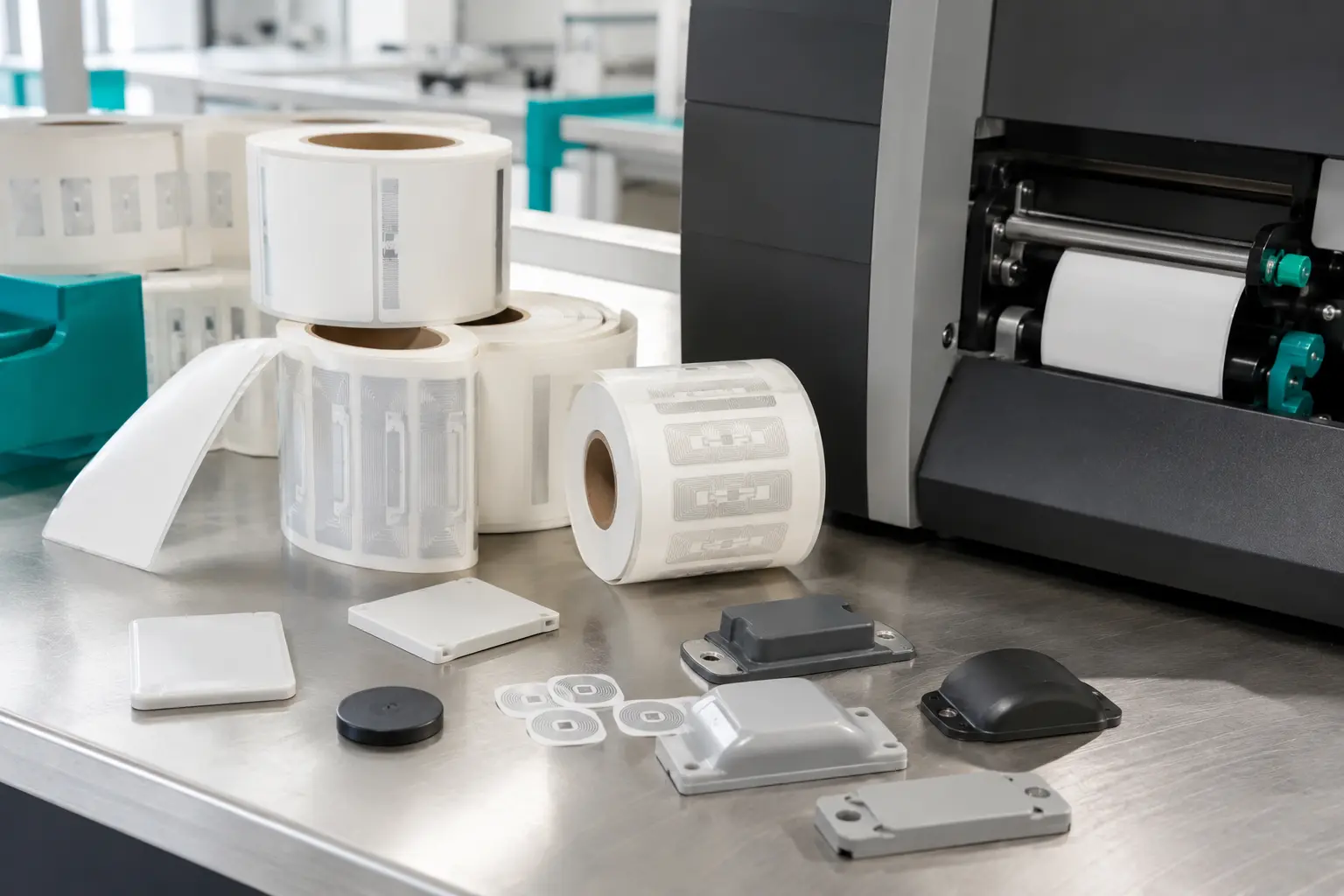
Supply route
Decide where fixed print, variable print and encoding should happen
There is no single best supply format. Blank RFID rolls give maximum on-demand flexibility; pre-printed rolls reduce local artwork work; pre-encoded labels can simplify deployment when identities are known in advance. The right route depends on data timing, volume, control and verification.
Four practical options
Choose the level of work completed before delivery
Blank smart labels
Print and encode all fixed and variable information at your workstation or line.
Pre-printed RFID labels
Receive approved branding or fixed compliance text, then add variable data locally.
Pre-encoded labels
Receive tags with agreed RFID data already written and verified for the project.
Printed and encoded
Align artwork, barcode, serialisation and electronic identity before delivery.
Quotation brief
What to provide for an accurate label recommendation
A sample product and a small, representative data set make the discussion faster and reduce ambiguity.
Send your requirements- Product material, contents and label position
- Label dimensions, facestock and adhesive
- UHF/RAIN, HF or NFC technology
- Fixed artwork and variable print fields
- Encoding data, format and number owner
- Roll core, outside diameter and unwind direction
- Batch, annual and peak demand
- Verification, reporting and acceptance rules
Quality controls
Questions to settle before serialised production
Frequently asked questions
Direct answers for your RFID project
Need an answer about a specific product, label or data workflow? Send us the details.
sales@oxfordtraceability.co.ukWhat is a pre-encoded RFID label?
A pre-encoded label arrives with specified data already written to the RFID inlay. It may also carry fixed artwork, variable text or a barcode. The data source, serialisation rule and verification requirement must be agreed before production.
When should labels be encoded before delivery?
Pre-encoding can suit operations without an on-site RFID printer, centralised number control or a label design that is largely fixed. On-demand encoding can be better when live operational data is only known at the point of use.
Can the printed barcode match the RFID EPC?
Yes, the visible data and electronic identity can be generated from the same approved record. The exact barcode content may be the full identifier, a human-readable representation or a related key, so the mapping must be defined and tested.
What information is needed for a quotation?
Provide label dimensions, product and surface, RFID technology, artwork, variable fields, encoding specification, expected volumes, roll construction, printer details if applicable, and how completed labels will be verified or accepted.
Make the next decision easier