Encode while printing
Write the required tag data as the label is printed, keeping visual and electronic identity aligned.
Print, encode and verify
Bring human-readable print, barcodes and RFID data together in one controlled process. We help match print width, resolution, duty cycle, connectivity and encoder technology to the labels and data your operation actually uses.
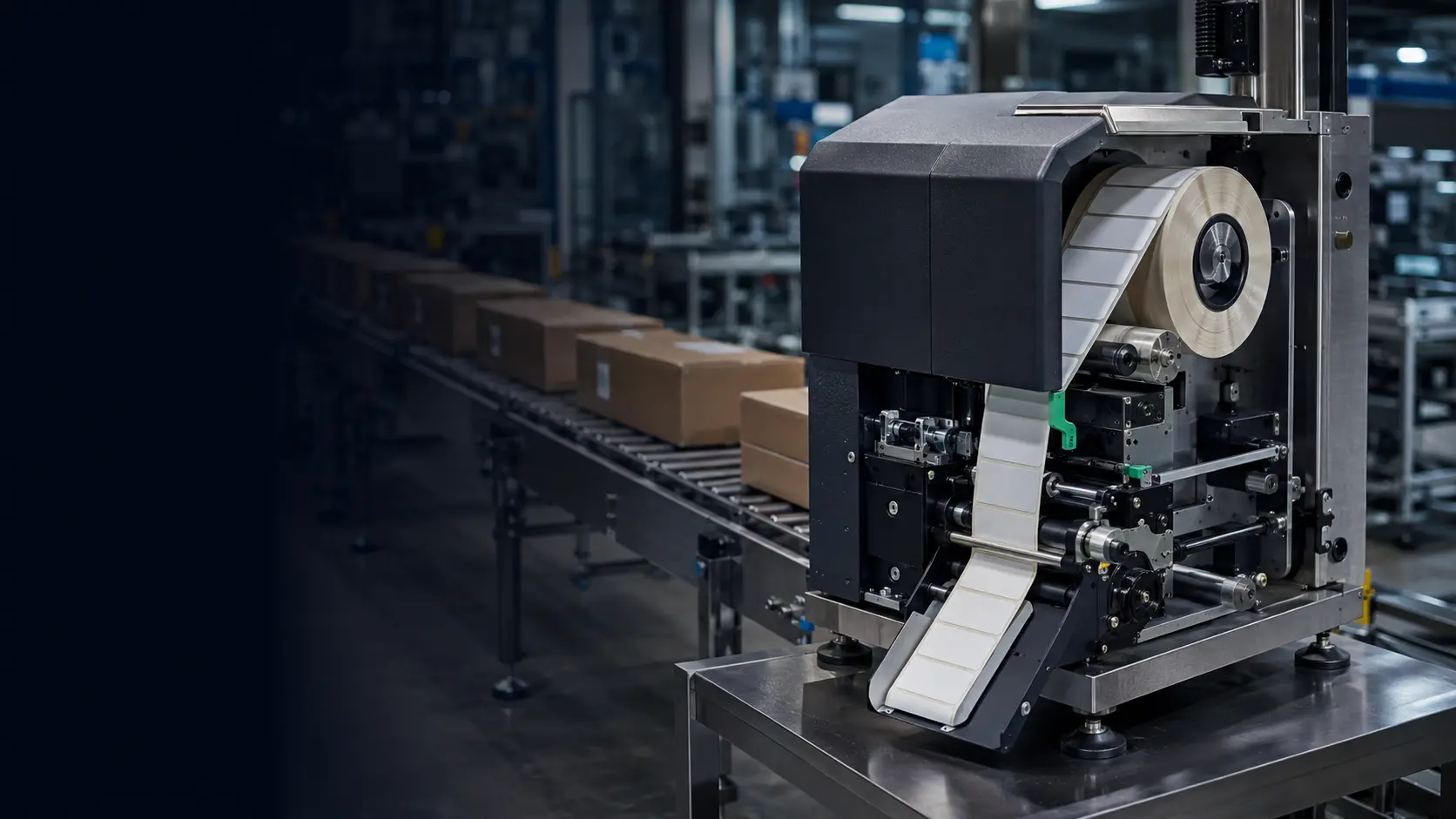
A complete working process
We consider the label, data, encoder, product and downstream read point together—because each one affects the result.
Write the required tag data as the label is printed, keeping visual and electronic identity aligned.
Detect tags that cannot be encoded and configure a controlled reprint or reject workflow.
Choose desktop, mid-range or industrial platforms around label volume, changeovers and operating environment.
Plan integration with label software, databases, ERP, WMS or production systems from the outset.
Specification checklist
A short discovery call and representative samples can remove much of the risk from equipment and media selection.
Start the specificationWhere it fits
Frequently asked questions
Have a more specific technical question? Send a sample or speak directly with our team.
sales@oxfordtraceability.co.ukIt is a thermal label printer with an integrated RFID encoder. The machine prints visible information and writes data to the RFID inlay within the same label, then checks whether encoding succeeded.
Many platforms can print suitable non-RFID labels as well, but media sensing, calibration and setup still need to match the label construction. We confirm the intended media mix when specifying the machine.
Yes. Sample media and a representative data file allow us to assess print quality, encode position, read performance and the proposed verification workflow before final specification.
Make the next decision easier
State which RFID technology and data format the application uses, the identifier source and whether every item needs a unique value. Specify human-readable text and barcode independently, then define how they correspond to the encoded identity. In GS1 EPC applications, the selected encoding must suit the identifier and serial-number requirements. Do not assume that copying the visible characters into tag memory creates the required data structure. Agree the encoding rules with the system owner and verify the decoded meaning during the trial.
An RFID printer-encoder must work with the intended label dimensions, inlay position, roll layout and print materials. Use production stock rather than a visually similar blank label. Follow the selected equipment’s calibration method and include ordinary roll changes in the commissioning plan. Evaluate printed quality and encoded read-back separately. A successfully encoded label at the printer may still read poorly after application to a metal surface, liquid-filled pack or another challenging item, so extend trials to the actual use position and reader arrangement.
Define what happens to a label that prints but fails encoding, encodes but fails inspection, or is damaged before application. Record which identities were issued, used, voided or replaced according to the agreed workflow. A repeated print request needs a deliberate rule: reusing an identity and allocating a new one have different consequences. Test a lost acknowledgement and interrupted job so the system does not silently produce duplicates. Retain enough event information to associate the applied label with its intended item without claiming that printer read-back alone proves the tracking process.